




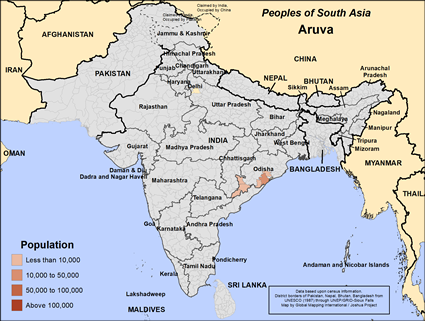
The Aruva people are found primarily in the state of Odisha in eastern India. They speak Oriya (Odia), which connects them to the broader regional culture while maintaining a distinct community identity. Historical information about the Aruva is limited, but older ethnographic accounts describe them as a coastal agricultural caste in areas such as Ganjam.
Some traditional accounts suggest mixed cultural influences in their origins, and over time they developed into a localized caste community with their own internal structure, including hereditary leadership roles and clan divisions.
The Aruva are primarily agricultural workers. Many cultivate crops, while others work as day laborers, particularly if they do not own land. A smaller number have moved into other forms of employment, including office work.
Family and social structure follow traditional caste patterns. They prefer to marry within their own community and often practice cousin marriage. Property is typically passed from father to sons, with the eldest son assuming leadership of the household.
Village life is close-knit, with strong family ties and clearly defined roles. Social customs and ceremonies—especially marriage and death rituals—remain important parts of community identity.
The Aruva are almost entirely Hindu. Their religious life includes worship of Hindu deities as well as devotion to local village gods.
Their practices reflect a blend of formal Hindu belief and local traditions. Rituals are performed for major life events, and spiritual leaders within the community may guide ceremonies. In some cases, elements of older cultural influences can still be seen in their rituals, though they do not follow Islamic worship practices despite historical contact.
The Aruva face both practical and spiritual challenges. Economically, those without land depend on labor work, which can be unstable. Rural living conditions may also limit access to education, healthcare, and long-term economic advancement.
Spiritually, they have little exposure to the gospel and limited access to biblical teaching. Their strong Hindu worldview, combined with traditional practices, creates barriers to understanding the message of Christ. At the same time, their structured community life provides an opportunity for relational, long-term engagement.
Pray that the Aruva people would come to understand the truth of the gospel and place their faith in Jesus Christ.
Ask God to raise up faithful workers who will go to the Aruva with perseverance, humility, and clarity.
Pray that the Aruva would be adopted through the People Group Adoption program, leading to sustained prayer and intentional gospel outreach.
Pray that, as individuals come to faith, they would grow in maturity and disciple others within their families and communities.
Scripture Prayers for the Aruva in India.
https://en.wikisource.org/wiki/Castes_and_Tribes_of_Southern_India/Aruva
https://peoplegroups.org/people_groups/pg042089/
| Profile Source: Joshua Project |



